Saltmarrow
Every boom reports weekly
01
LIVE TONNAGE · WEEK 33
14 booms. 41 tonnes this year. And three of them are not working.
Saltmarrow intercepts plastic at river mouths before it reaches open water, because a tonne caught in a river is a tonne that never has to be found in an ocean. Every device reports its own tonnage weekly, including the bad weeks.
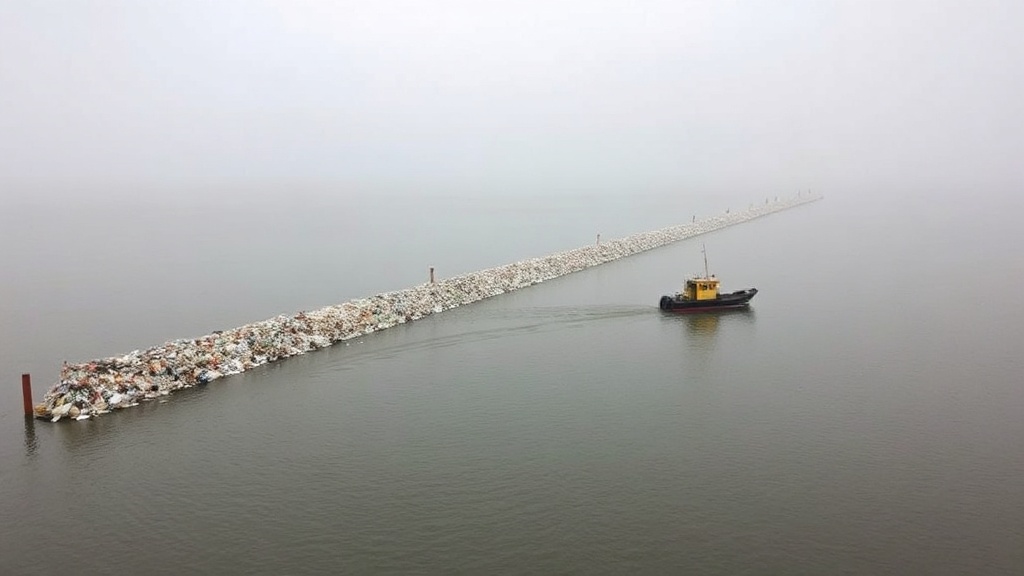
Boom 05, Mill Quay, on the ebb. The float line does the work; the skirt holds 400 mm below the surface so fish pass under it.
1.14 t THIS WEEK
This week, device by device
Weighed on the hard standing, logged before anyone drives home. Updated Sunday evening.
NO
RIVER MOUTH
TONNES
VS PROJ
01
Calder Mouth
0.14 t
+6%
02
Ardleigh Cut
0.11 t
+2%
03
Penrose Creek
0.09 t
−4%
04
Sandbar Reach
0.02 t
−71%
05
Mill Quay
0.13 t
+11%
06
Trescoe Bight
0.08 t
−1%
07
Halloway Drain
0.12 t
+9%
08
Fenn Estuary
0.10 t
+3%
09
Weedbank
0.03 t
−68%
10
Coombe Head
0.07 t
−6%
11
Long Sands
0.02 t
−74%
12
Baxter Reach
0.09 t
+4%
13
Otterhead
0.08 t
0%
14
Saltings Gate
0.06 t
−9%
TOTAL, 14 DEVICES
1.14 t
02
WHY RIVER MOUTHS
Not the open ocean. The last narrow place before it.
Roughly 80 percent of ocean plastic arrives through rivers. Catching it at the mouth costs us about 340 per tonne. The same tonne recovered offshore costs between 4,000 and 20,000. That is the entire strategy.
A river mouth concentrates the flow into a few hundred metres, twice a day, on a schedule a tide table can predict. Offshore, the same material is spread over thousands of square kilometres and half of it is below the surface by the time you arrive.
AT THE RIVER MOUTH
340
per tonne recovered, all in
THE SAME TONNE, OFFSHORE
4,000–20,000
which is why we do not go out there
03
WHAT WE ACTUALLY RECOVER
Sorted by type, by weight, this month
This month's recovery by weight: 34 percent packaging film, 22 percent bottles and caps, 18 percent fishing gear, 11 percent expanded foam, 15 percent unsorted fragment.
Packaging film
34%
Bottles and caps
22%
Fishing gear
18%
Unsorted fragment
15%
Expanded foam
11%
Fragment is the category we like least. It is anything under 25 mm that cannot be identified at the sorting table, and it is the fraction that grows every year.
04
THE THREE THAT ARE NOT WORKING
Booms 4, 9 and 11 are catching less than a third of projection.
BOOM 04
Sandbar Reach
−71%
The sandbar it sits behind moved. The channel now runs 60 metres east of the skirt and most of the flow misses us entirely. A survey is booked for September.
BOOM 09
Weedbank
−68%
Fouling with weed every eleven days. Once the mesh loads up, the boom rides high and the surface layer passes underneath. We are trialling a coarser skirt.
BOOM 11
Long Sands
−74%
A bad site choice, plainly. The catchment above it is mostly farmland and the plastic load was never there. We are moving it in October.
We publish these three every week alongside the eleven that work. A boom that is failing quietly is worse than a boom that is failing in public.
05
WHERE THE PLASTIC GOES
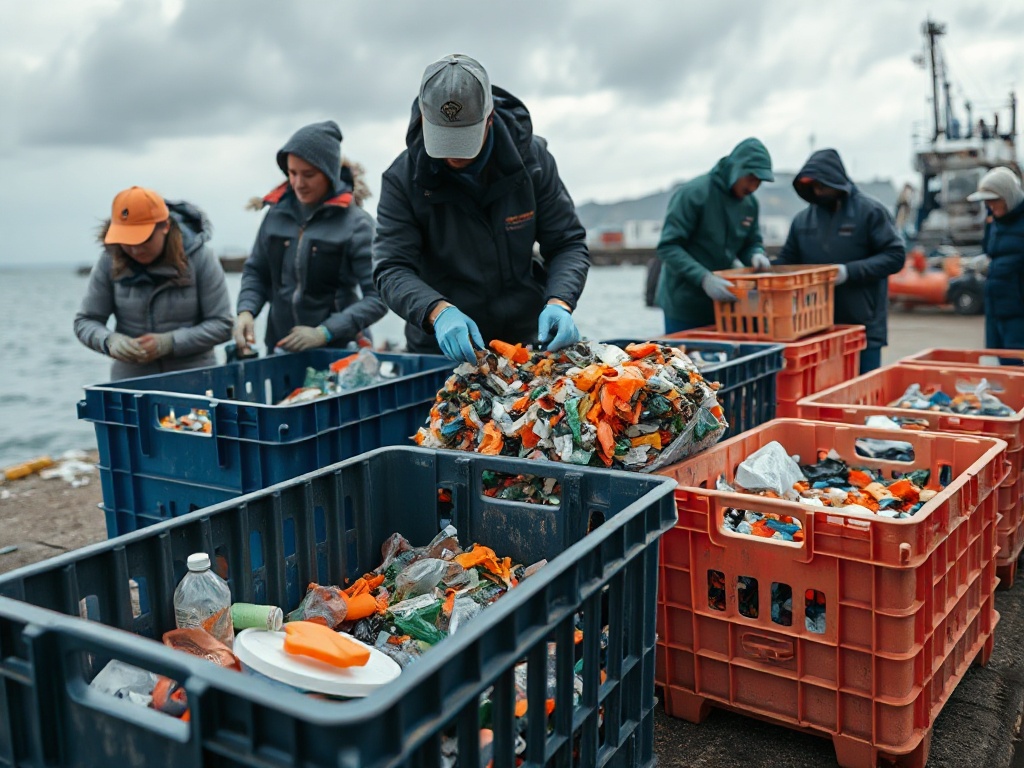
After we lift it, someone has to sort it by hand
Recovered plastic is sorted by hand, and 61 percent is recycled through two named processors. The rest goes to energy recovery. We do not pretend it all gets turned into sunglasses.
61%
recycled, two named processors
39%
energy recovery, no better word for it
06
VOLUNTEER DAYS
What a Saturday actually involves
A volunteer Saturday is six hours, mostly sorting on a hard standing in the wind. It is not glamorous, there are usually 200 nappies, and 70 percent of people come back.
08:30
Meet at the hard standing
Boots, gloves and a hot drink. Nobody is turned away for being late.
09:15
Lift the boom
Two crew on the workboat, everyone else on the winch line and the tally sheet.
10:30
Sort by hand
Five graded bags: film, bottles, gear, foam, fragment. This is four of the six hours.
12:30
Stop for forty minutes
Soup from a flask. The wind does not stop, so we eat facing away from it.
14:30
Weigh, log, publish
The number goes on the boom page before anyone drives home, good or bad.
07
FUNDING, PUBLISHED
Our cost per tonne, and where the pound goes
Our all-in cost is 340 per tonne recovered, and 71p of every pound goes into operations. Both numbers are updated quarterly whether they improve or not.
340
all-in, per tonne recovered
71p
of every pound into operations
THE 340, BROKEN DOWN
Boom hardware, moorings and repair
128
Workboat, fuel and crew
76
Sorting, haulage and processor gate fees
84
Monitoring, weighing and publishing
52
TOTAL PER TONNE
340
GIVE, OR COME OUT ON A BOAT
A boom costs 4,100 to build and 1,900 a year to keep in the water.
Fund a boom and you get its weekly tonnage by email, including the weeks it catches nothing. Or give us a Saturday and sort it yourself — bring gloves, we have the rest.
Saltmarrow
Registered marine conservation charity. Tonnage published every Sunday, audited annually.